Showing posts with label Concept development. Show all posts

Monday, 25 March 2013

urubutsin body and retop

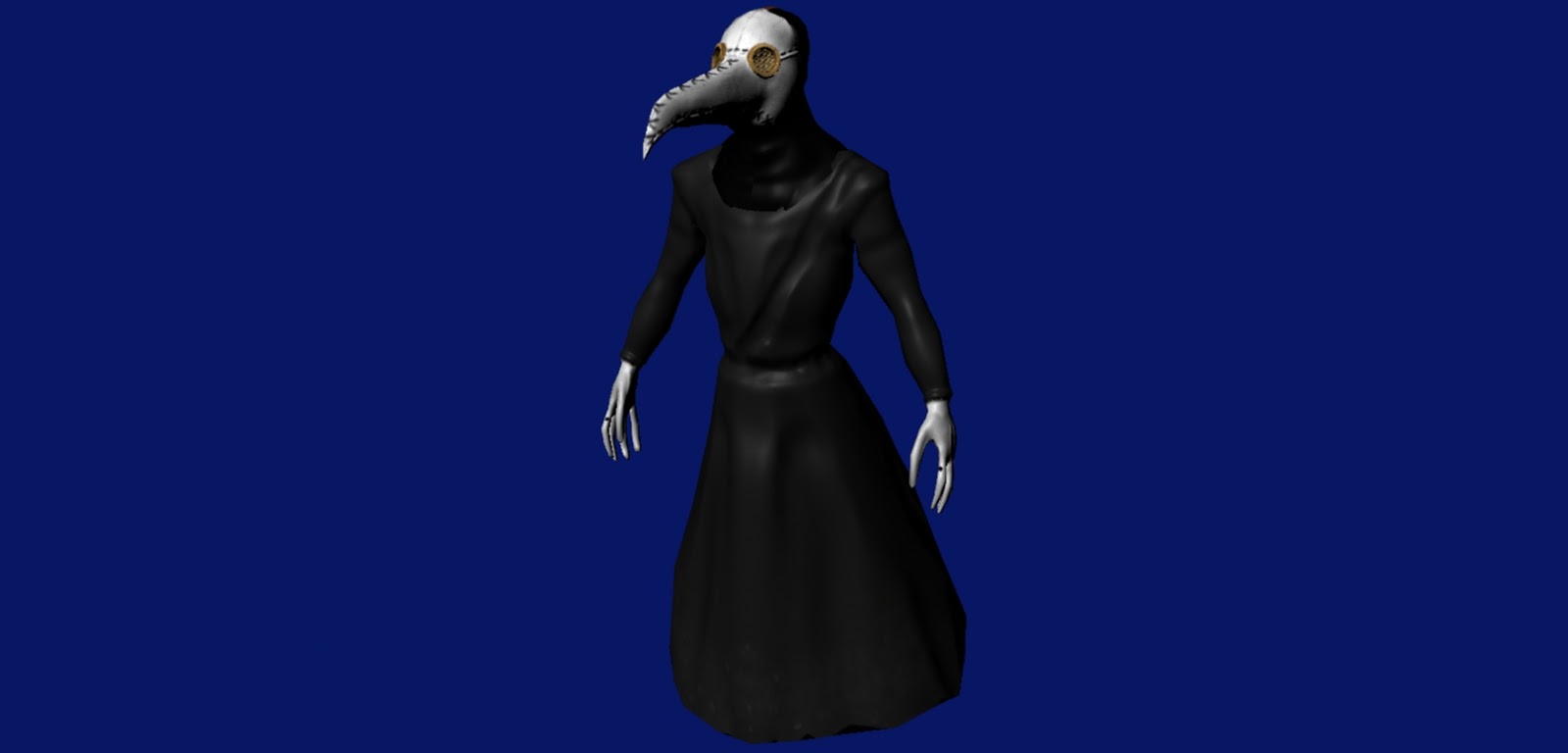
I have finished creating the body mesh for urubutsin in mudbox, and retopologised the body and head.


 This is the finished base model for urubutsin in mudbox, he is missing a number of assets (hat,cane. etc) but i will be creating them at a later time.

This is the retopologised model in maya using a lot less polygons however in this image the normals applied to the head mesh had done something odd. The normals were facing the correct way and the head looked good in the high quality render viewport but when rendered they looked reversered. I attempted to invert the normals, edit the green in the normal map itself and still had the same issue no matter what i tried. Below is a closer render of the head.

Eventually i discovered it was the way that i had created the head that caused the issue. I had created it by retopolgising half the head and baking half the high poly head textures and normals onto it, then mirroring the mesh and attaching the two halfs of the head. So to fix the issue i simply unwrapped the head when it was a whole and re-baked the entire head texture onto it and the normals are now the correct way and it looks much better.
I have also added a seperate shader for the eyepeice in this render.

Wednesday, 20 March 2013

Urubutsin character head

I have created the head for the character urubutsin in the final animation using mudbox Im not overly experienced with it having previously only done quick tests and general messing about with it in the past however i am fairly pleased with the finished head.
This was actually my 2nd model of the head as my laptop crashed soon after finishing the model the first time and the file was unfotunately lost.

Here is a render of the model after a bit more detail had been added and also painting the textures onto the model. This was actually again my first attempt at texturing in mudbox aswell and again I am pleased with the quality the of the finished head.
However there are a few issues one being the loss of detail the closer to the tip of the mask this was simply due to the fact that the model began as a mudbox basic head and I edited it to this shape and because of that the topology caused there to be a lot more divisions at the base of the head than the tip. The second issue is the polygon count which i will need to reduce through retopologising the model and baking the textures to make it suitable for animation.

Sunday, 24 February 2013

concept for final animation

For developing the concept I began with the rather simple idea of a landlord coming round to the house of a tenant to retrive the rent with the inital plan of the landlord being animated using a rotoscope of a vulture to put emphasis on greed and the tenant being motion captured. However after a meeting with my project supervisor we agreed the story was fairly boring so i decided to focus on the most insteresting element of it which was the vulture landlord.
  After some more research on vultures i eventually unconvered some myths about their wing's having the ability to eclipse the moon and discovered the amazonian myth of Urubutsin the vulture god who was described as a horder of light and the king of all birds.


The myth of Urubutsin goes that he had all the light in the world and his minions wings blocked out any other light from touching the earth. Two brothers named Kuat and Iae who's tribe was in constant fear of attack from wild beasts due to the darkness decide to steal the light from Urubutsin. They hid themselves in a corpse and when Urubutsin came down to feed Kuat grabbed his leg preventing him from escaping forcing the king of birds to negotiate. He offers half of his light to the brothers in return for his freedom this light became the sun and the moon and it was agreed that day should alter with night. After this Kuat became associated with the sun and Iae the moon.
   This was a much more interesting tale and began to look at ways of adapting it to make it work in a short animation. Eventually it was decided to take it one step further and base it in a different setting, after looking at some south american art and deciding that the style wouldn't work well with my aim I decided to create an after-story based in the renaissance period during the black plauge.


The story i decided on was one where Urubutsin tries to retieve the light that was taken from him by Kuat and Iae by harvesting it from their corpses which were being kept in a temple to solar deities in Italy. Disguising himself as a plauge doctor he enters the town where the temple is and enters the temple. Unknowingly to him another 2 brothers notice the suspicious plauge doctor and follow him to the temple and stop him after noticing the moonlight disappearing.

Friday, 15 February 2013

Rotoscope and keyframed 2

Here is my second attempt at adding keyframed animation on top of rotoscoped footage. The issue i found mainly with doing this as a test was attempting to find a balance between what was allready being shown on screen and what i was adding to it with keyframed animation so i could keep the actors origional performance while implying my own influence to it.
    The issue i've found with the use of this technique in a film scene such as this is that essentially the intention is to try and improve on an established performance created by the actors involved and trying to improve on it. I believe aswell with this test i focused a bit too much on attempting to mimic certain actions of the live actors due to the nature of the test and because of that the overall performance may have suffered for it.

motion capture and keyframed 2

Here is my second attempt at editing motion capture footage but this time I have the kinect rig controling the morpheus rig. The Morpheus rig is a highly customisable rig created by Josh Burton (link below) and will most likely be the rig i will use in future when using motion captured footage.
http://www.joshburton.com/projects/morpheus.asp

 Allthough the capture itself was intenionally bad to begin with i managed to clean up a lot of the more jittery parts of animation and fix some positioning issues. However from doing this test i have identified how to correctly apply the mesh to the rig the next time and also the importance of having a clean as possible inital capture.
    The major issues with using the kinect system for motion capture that i've identidied from this test are crossing limbs, hidden limbs and also planting the entire rig to a set floor plane. However when applied correctly there should be no longer any mesh issues and the main concern at that point would be to improve the animation on the capture

Thursday, 7 February 2013

motion capture and keyframed animation first attempt

I attempted to simply record and fix a peice of motion capture footage using the kinect system and animation layers in maya. For the sake of test i simply added some quick rigging to the kinect skeleton in maya and used the animation layers to blend the key-framed and motion captured footage together to remove some of the glitches that appearred in the footage.
It worked well and served its purpose however i now need to focus on attempting to attach the rig i'll be using to the skeleton so that i can quickly apply the animation to a custom rig.

Rotoscope and Keyframed animation first attempt

I have begun the combination tests of adding keyframed animation to both the rotoscope and motion capture footage. I am avoiding the combination of motion capture and rotoscoping given that they are both ways of achiving a similar outcome and with the exception of facial expressions there is no benefit to combining them.
My first attempt at combining techniques was the combination of rotoscope and keyframed animation using a the construct scene from The Matrix. I used rotoscoping to animate the scene then attempted to add to it using keyframed animation however even though the peice was animated and looked decent, through exagerating the movements of the characters I lost sight of the inital point of the scene and the movements werent approriate to the peice.
My next attempt i will be trying to focus more on the emotional performance in the scene rather than the movement within it.

Wednesday, 30 January 2013

Rotoscope and Roto-animation

It is best for me to me be clear about the differences between rotoscoping and roto-animation.

Rotoscoping is a technique that is majorly used in 2d animation where an animater essentially traces a peice of live action footage frame by frame to imitate the movement of the subject in a 2d animation.
Roto-animating is a 3d variation on that technique where a peice of live action footage is braught into a 3d program and the character is animated using close referencing on top of the footage. The first instance of this technique being used is (once again) with Gollum in The Two Towers and i believe it was the team at weta digital that gave it its name of Roto-animation.
Both of these techniques are incredibly useful to animators especially for studying the movement of  subjects that may be more difficult to animate such as animals.
I mention rotoscoping a lot on here however i do mean roto-animation when that is said, The reason being is that the term roto-animating does not seem to be as well established as the term rotoscope and it is in the end merely a variation on the rotoscope technique.

In conclusion when i mention rotoscope on this blog i am mostly refering to roto-animation.

Saturday, 17 November 2012

Motion capture using kinect

During pitch week one of the peices of feedback i recieved was to download some motion capture data and attempt to do some clean up animation on it. However instead of downloading the data i decided to try and capture some myself using a Xbox Kinect system, motionbuilder and software from www.brekel.com . Rather than explain step by step i will instead link i followed to achieve this  http://www.reubenfleming.co.uk/tuts.html .

This is an example of the captured data imported into maya, i have not attempted to edit it yet however i will be attempting it in the next few weeks. The most interesting part of doing this however was being able to have a character mesh attached to the skeleton while capturing which was entertaining and gave me some ideas that may be used in a future project.

Thursday, 15 November 2012

Character animation

Concidering my project is not only on motion capture and imitaion i created a short piece of performance animation while attempting to keep a couple of things in mind. These were attempting to have 2 characters interact in a scene, animating a exaggerated and a subtle character, attempting to lead the eye of the viewer and basically most of the 7 essential acting concepts outlined at the beginning of "Acting for Animators" by Ed Hooks.

This is the piece i ended up with, allthough there is no sound to go with the animation my thoughts at the time was the first character asking " Well? What do you think?" and the second character repling with "it's ok". The scene itself was originally going to be losely based on my own personal experience of the university interview however as the scene developed so did the concept so it has ended up being one freind asking another for their opinion on their written work.
From this creating this short animation i have personally discovered a couple more useful things in relation to animation, one rather obvious one is that attempting a short straight ahead animation without storyboarding beforehand takes much longer than it initally should and also that when animating two characters interacting a scene attempting to animate them both seperately then animating the interactions does work but not as well as it could.

Wednesday, 7 November 2012

Rotoscope animation

Continuing on from my mimics before i have been looking into rotoscope animating in 3d. My reasoning behind this was very similar to my reason for the still image mimics, to try and imitate the feel and performance of a live actor in a 3d character. Also when researching into gollum as mentioned previously, I discovered that in some cases this was a technique they used to imitate Andy Serkis's performance. Allthough its a rather old technique which has been used in many 2d animations and also used by walt disney to study movement instead of direct imitation and tracing it was interesting to see it being transfered into a 3d character.
   At any rate below is my attempt at rotoscope animation in 3d using a scene from the film "Taxi Driver".


Allthough its not a perfect representation it is fairly close and i do believe i could have gotten it a lot more accurate if i had given it another few passes. What i have discovered from this test is firstly and rather predicibly that it is possible to re-create live action scenes in 3d while still keeping the same impact and emotion that is in a scene and secondly that the technique is also useful for studying the more subtle movements in a human or any creature in 3d also.
 
While animating this peice one thing that i did notice was that as an animator i wanted to exaggerate the movements of the character beyond the limits of the actor and had to stop myself from adding extra animation where there was none. Also that the live actor rarely blinks which is something that i  feel in animation adds life to a character.

Tuesday, 23 October 2012

Inspiration and current research question.

Since it has been a while since i updated last and i also realised i had forgotten to upload my inspiriation for my project so this post is simply to try and bring this up to date as will the next few posts.

Currently i havent narrowed down my research question completely yet however at this moment in time I'm currently researching how performance and motion capture can improve an animation but that isnt exactly what im finally hoping to achieve.

The following are simply films and animations that have inspired the direction my project is going in.


Firstly (and most likely the main inspiration) Gollum from Lord of the Rings the Two Towers. The character and animation pretty much encapsulates the direction that my project has taken. As Im sure i've mentioned before the way firstly that the keyframed animation and motion capture works together is seamless and adds a lot more to the character than one or the other could on their own, and secondly his schizophrenia is the best exmple of how a characters performance effects their appeal I can think of since he is essentially two characters dispite looking the same.


All pixar animations! (Brave is above simply because its their latest film and is based very near my hometown) For any 3d animator Pixar is always an inspiration however in relation to my project as far as performance through pure keyframed animation goes there isnt any studio that can do it better in my personal opinion.


Avatar simply because it is visually stunning and once again the combination between live action, 3d and motion capture is very impressive.

There are numerous other examples of animations and short's that inspire me and make me want to animate such as the "Mists of Pandaria" cinematic and "Ark" by Grzegorz Jonkajtys and Marcin Kobylecki aswell as many others however i feel these examples are the most relevant to the direction my project appears to be going in.

Wednesday, 10 October 2012

Notes on Gollum (The Two Towers)

This post is simply an update of some notes i've taken while looking into how Gollum from the Lord of the Rings films was created from a technical viewpoint mainly looking at the process involved and how it evolved into the final character in the film.

His design began with 2d concepts then his body was sculpted using real life inspiration to make him look realistic. The sculped model was then scanned to copy the scuplture as a 3d model. Origionally he was designed as a purely 3d and animated character and only a voice actor was needed, however they soon found out that expression and voice acting couldnt be seperated if they wanted a believable character. After this they began doing scenes with Gollum differently they did it in two stages firstly they did a animation reference pass with the live actor in shot to help the animators and also so that the rest of the actors know how to react to this 3d creature. Then they would do a mime pass which was initally going to be the final shot which was simply the same scene without the live actor that would be Gollum. Then due to the performance given by Gollums actor they decided to change his design mid production to make Gollum look more like him and be able to imitate his facial expressions more precisely. Gollum was resculped using the actor for reference and the actor now became the motion capture artist for Gollum. Gollum was animated in the end with a combination of motion capture and keyframed animation, facial expressions hand and feet movements were keyframed at all times and a lot of the more unrealistic shots that couldnt be motion captured also were. Roto-animation was a technique heavly used which is where the animators would use the animation reference pass of the film and animate over the live action shot while copying the actors movements acurately then edit the actor out. Originally the animators had a different view of the character than the actors so it was important for them to get to know the character better before continuing to animate him.

That is most of the relevant information i have taken from the various documentrys on Gollum from The Two Towers film. The main parts of this that i believe will be the most useful in  the future is the multiple passes of a live action scene and the use of Roto-animation.

Wednesday, 3 October 2012

Live action actors still image mimics

I have created a couple of mimics based on poses from various films in an attempt to imitate the look and feel given by each indivdual. All these imitations have been created using the Norman rig V010 downloaded from www.11secondclub.com.

My first attempt was with Jules from Pulp Fiction. The reason behind this choice was because it has become an iconic film moment and Samuel L Jackson delivered what I feel is a unique peice of acting in this scene. I believe with this one I attempted to edit the sizes and shapes of facial features too much to look more in proportion with the actor, unfortunately this doesnt help with the results.


Next was the Mask from the film The Mask. The reason behind this choice is simply because of the over the top and exaggerated character that Jim Carrey creates in this film and since the character is based on cartoon stylings it seemed appropriate.


The third mimc I created was yet another exaggerated character Austin Powers from the Austin Powers films. The reason for this choice is fairly similar to the one above except this is a realistic exaggerated character.


The fourth mimic i attempted is a more serious role The Joker from The Dark Knight. The reasoning behind this one was simply after attempting some exaggerated characters i felt it would be benificial to imitate some more serious ones and preferably a villian. Also most people would argue that The Joker is one of the greatest movie villians of all time.


Finally i attempted to mimic Maximus Decimus Meridius from the film Gladiator. This again is another iconic film moment from a realistic and believable character. Also with such an extreme facial expression it helped me see some of the limits of the Norman rig.


Conclusion

Through this exercise i have noticed how much of a difference a change of expression and pose can make in the look an feel of a character dispite being a single model. Also since these are only still images at this time i am hoping to learn more from full animation tests in the near future.

Tuesday, 2 October 2012

research question development

To begin my project for the year I decided it would be best to identify what areas of the industry i am interested in personally. These are as follows:
  • Animation in 3D
  • Modelling in 3D
  • Cloth and hair within program
  • Composition
  • Motion capture
  • After effects on the finished project
After a lot of thought however I managed to come up with a research question that will for the moment give me a direction to work in which is "How does the way a character is animated effect its appeal?"

Below is the notes and mind map that led me to this and suggestions in what ways to develop it further.